Reruns Are the New Front Line: How Archive Telly Became Britain’s Streaming Arms Race
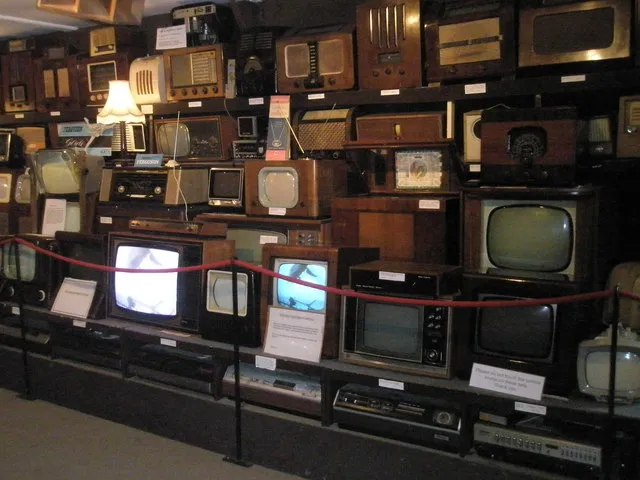
Photo: Basher Eyre, CC BY-SA 2.0, via Wikimedia Commons
There was a time when the back catalogue was exactly that: the stuff at the back. Now it is the main event. Scroll through the front pages of the major UK streamers in 2026 and you will see the same message repeated in different fonts: old telly sells. Classic sitcoms, decades-old dramas, documentary series that first aired when nobody had a mobile phone — all of it is being dusted down, repackaged and pushed hard.
This is not just a bit of nostalgic scheduling. It is a race. Archive rights have become one of the quiet battlegrounds of British streaming, and the winner gets something increasingly rare: a library that people will return to without needing a marketing campaign.
The comfort-blanket economy
Why is old telly suddenly so valuable? Because it does something new telly often cannot. It asks almost nothing of the viewer. You can put on a familiar sitcom while cooking, folding laundry or pretending to watch while scrolling on your phone. You do not need to remember a plot. You do not need to avoid spoilers. You do not need to commit to six hours of moody Scandinavian rain.
For streamers, that is gold. A classic British comedy can be watched in any order, repeated endlessly and sold to advertisers on the strength of pure recognition. It does not need a press tour. It does not need a second series. It does not need a cliffhanger. It just needs to exist, and preferably to have existed before most of the audience was born.
There is also the co-viewing factor. Old telly is one of the few things that can unite a household across generations. A parent puts on a sitcom they grew up with. A teenager rolls their eyes, then laughs at the same bit. The platform gets two viewers for the price of one licence fee, metaphorically speaking. In a fragmented market, that is a powerful trick.
The scramble for rights
What we are seeing now is a land grab. UK platforms are competing for access to archives that were once treated as repeats-of-last-resort. Public service broadcasters have their own deep shelves. Commercial streamers want a slice. Subscription services want exclusive windows. Free ad-supported channels want endless loops of familiar shows.
The result for viewers is a maze. A beloved series can be on one service in January, disappear in March and reappear somewhere else by autumn. Sometimes it is remastered. Sometimes it is not. Sometimes the episodes are in the right order. Sometimes they are not. Archive telly may be comfort viewing, but finding it can feel like a part-time job.
And old does not mean free. Rights are complicated. Music clearances, actor agreements, writer residuals, restoration costs — all of it adds up. A show that aired in 1984 is not automatically cheap to put on a platform in 2026. The archive is valuable precisely because it is not as simple as dragging a file from a cupboard.
Nostalgia as strategy
So is this smart or lazy? The honest answer is both, depending on what happens next.
Used well, archive telly is a long game. It gives a platform a sense of identity, a reliable backdrop and a reason for older viewers to stay subscribed. It can also act as a shop window for new shows. If you can get someone to open the app for a comfort rewatch, you have a chance of getting them to try something new. That is not nothing.
Used badly, it is filler. If a platform’s front page is wall-to-wall old favourites and the only new British drama is a co-production with a title nobody can pronounce, then nostalgia starts to look like an excuse. It becomes a way of avoiding risk rather than managing it. The schedule turns into a museum, and the new voices that should be coming through get pushed to the back of the shelf.
The uncomfortable truth is that archive telly is cheaper, safer and more predictable than commissioning. That is exactly why platforms like it. But a streaming service cannot live on repeats alone. Eventually the audience notices that the future has gone missing.
What British viewers actually get
More choice, in theory. In practice, the archive is being carved up and spread across paywalls. The classic sitcom you used to find in one place is now a reason to keep another subscription. The old drama you fancied rewatching is on a service you forgot you had. The documentary series you half-remember is available, but only in standard definition, with ad breaks in oddly timed places.
That is the strange trade-off of the archive boom. We have more old telly than ever, but it is not always easier to watch. The box set you bought in 2004 is starting to look smug. It does not need a password. It does not ask you to upgrade. It just sits there, quietly superior.
The long game
Nostalgia has a limit. The audiences who grew up with British classics are not getting younger, and a 19-year-old in 2026 does not necessarily have the same muscle memory for a 1970s sitcom or a 1990s detective drama. Archive telly can be discovered, but it needs curation, context and a bit of care. Dumping a hundred old episodes on a platform and hoping for the best is not a strategy. It is a storage solution.
The winners in this race will be the platforms that treat old telly as a living library rather than a panic button. Remaster it properly. Put it in the right order. Explain why it matters. Pair it with new shows that share its spirit. And keep commissioning, even when the easy win is sitting right there in the archive.
Because the real battle is not just about who owns the most reruns. It is about whether British streaming can use its past to build a future, or whether it just keeps pressing play on the same old tape.