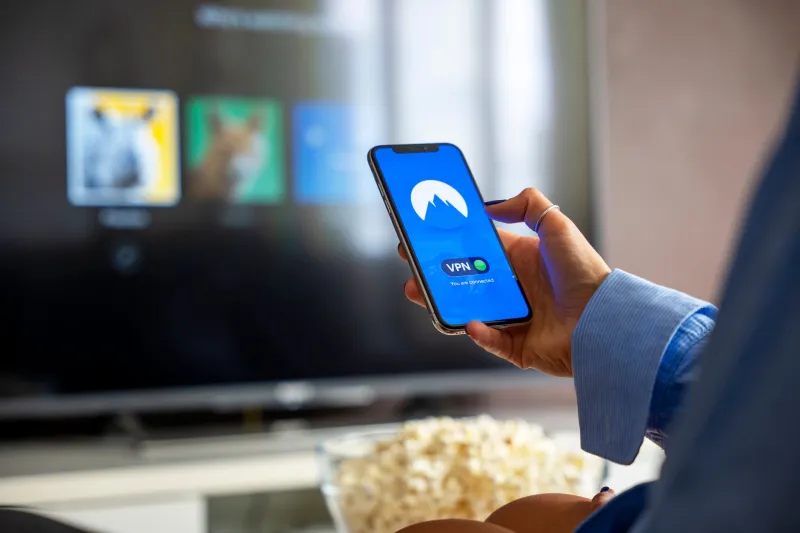
Breaking the Loop: One Month Trying to Teach My Streaming Queue Some Manners

Photo by Photo by Jonas Leupe on Unsplash on Unsplash
There's a particular kind of loneliness to opening your telly on a Tuesday, scanning four home screens, and realising every single one of them has decided you are a person who watches police procedurals and nothing else. You are not. You watched one police procedural. In March. But the algorithm has made its mind up, and it's not for turning.
So I set myself a project. One month, four platforms, one stubborn question: can you actually retrain a UK streaming algorithm, or are we all just shouting into a very expensive void?
The invisible scaffolding behind your home screen
Before the experiment, it's worth knowing what you're up against. The row that says 'Because You Watched' is rarely the whole story. Behind it sits a stack of signals: what you finished, what you abandoned eleven minutes in, what you searched for at 11pm and immediately regretted, what your household watched while you were out, and — crucially — what everyone else in the country is watching on the same box.
That popularity layer is why trending rails feel so eerily identical across Britain. When a big Saturday-night title lands, the whole country's front page tilts towards it, and your personal taste gets folded into a national average. Personalised thumbnails make it worse. The same show is offered to you with a grim detective on the artwork or a funny detective on the artwork, and the platform quietly learns which version of you clicks.
None of this is sinister. It's just lazy in a way that's hard to notice, because a good recommendation feels like luck and a bad one feels like being misunderstood by a machine.
Ground rules
Four apps: Netflix, BBC iPlayer, ITVX and Prime Video. Every day for a month, I looked at the top three rows on each home screen and wrote down whether anything new had surfaced. I did not let autoplay run. I did not click anything out of boredom. I finished what I started, or I stopped it deliberately. And I used the feedback tools each platform offers, however buried they were.
I also did the thing everyone recommends and nobody enjoys: I started again.
Week one: the great reset, and its limits
A fresh profile is not the blank slate you imagine. It's more like moving house and finding the previous owner's mail still arriving. Netflix does let you delete individual titles from your viewing history, which genuinely strips out the most stubborn 'because you watched' hooks — but the effect takes days, and it's a title-by-title grind rather than a switch marked 'forget everything'.
Prime Video makes it easier to spin up a new profile, and the first few days do feel refreshingly undiscovered. iPlayer and ITVX are trickier. Their recommendations lean heavily on what you've watched as an account, and both nudge you towards the same broad spread of flagship shows regardless of how carefully you curate. Starting over there felt less like a reset and more like a polite shrug.
Verdict after seven days: resets buy you about a fortnight of novelty. Then the old patterns creep back, because the old habits did too.
Week two and three: what actually moved the needle
The single most effective thing I did — and I cannot stress this enough — was telling the platform no.
On Netflix, thumbs-down plus the 'not for me' reason made a visible dent within about three days. One row I'd been ignoring for months simply stopped appearing. Prime Video's 'not interested' buttons are similarly blunt and, once I started using them on the trending rail rather than just the niche stuff, my front page stopped looking like a billboard for whatever launched that week.
The second most effective tactic was searching for what I wanted instead of browsing for it. Every deliberate search sent a clearer signal than ten minutes of scrolling. Within a fortnight, my Netflix home screen had sprouted a row of bleak Scandinavian dramas I'd never been shown before, purely because I'd searched for two of them by name.
Third: finishing things on purpose. Half-watched shows generate the murkiest signals of all — the platform can't tell whether you loved it, hated it, or fell asleep. Closing an episode out, or removing it from Continue Watching, tidied my queue more than any reset.
What didn't work: hiding a single title and expecting the genre to disappear. Hide the show, and you get its cousin by Friday.
The platform-by-platform reality check
Netflix remains the most responsive of the four if you're patient enough to poke it, but the manual effort is absurd — you're effectively doing data entry to improve a product you already pay for. iPlayer's editorial curation is genuinely good and sometimes beats the algorithm outright; the trade-off is that it's slow to shift, and it will always push its own big titles hard. ITVX is cheerfully blunt: it wants you on the big shows, and it makes that plain. Prime Video responds well to feedback but bombards you with upsells and add-on channels that muddy the water.
A caveat worth stating plainly: features shift constantly, so if a button has gone missing, it's probably been moved rather than removed. Dig through account settings before you give up.
The takeaways, if you can't face a month of this
- Use thumbs-down and 'not interested' like you mean it, on the popular stuff especially.
- Search for the thing you want, by name, even if it's already in your queue.
- Delete or close out abandoned titles; half-watches are algorithmic fog.
- Give any change at least a week before judging it.
- Treat a profile reset as a two-week holiday, not a renovation.
- Remember the trending rail is the nation's taste, not yours.
The honest conclusion? You can nudge a UK streaming algorithm. You can't overhaul it, and you shouldn't have to spend your evenings doing unpaid product work for a company that already has your direct debit. The loop loosens if you're deliberate — just don't expect the machine to develop taste. That bit is still on you.