A Day Behind the Group Chat: Britain's Overnight Streaming Problem
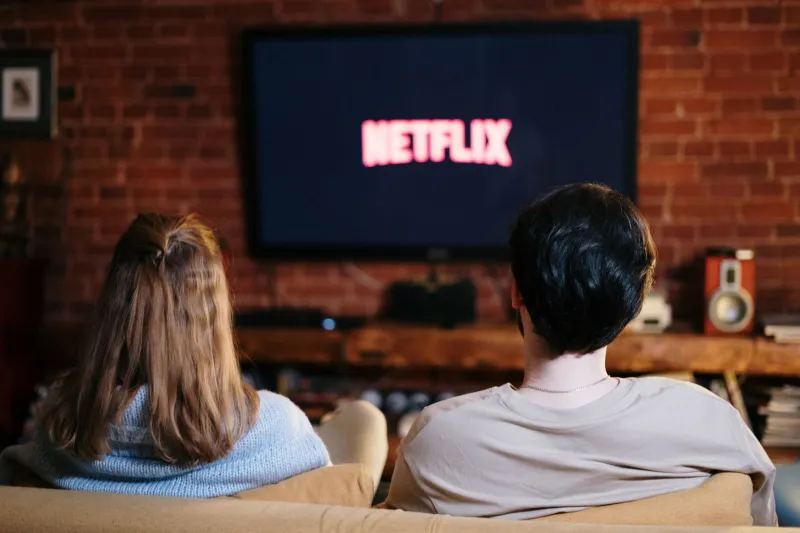
There is a particular kind of British morning that begins not with an alarm but with a thumb hovering over a screen. The kettle is on, the toast is going cold, and somewhere between the weather and the traffic you are trying to work out whether the thing everyone was posting about last night is now safe to open. That is the shape of modern telly: a national conversation that starts at 3am and reaches the rest of us in stages, like a tide coming in.
A Californian Clock and a British Kettle
The mechanics are boringly simple. Most of the big streaming services are American, and most of their release decisions are made in Los Angeles, where the working day is winding down just as ours is getting going. A programme that "lands Friday" in the US often means midnight Pacific — which is 8am here, if you are lucky, or 3am if you are not. Global drops, the ones designed to stop anyone anywhere getting ahead of the discourse, tend to pick a time that suits nobody in particular and mildly inconveniences everyone. The upshot is that the year's most-hyped titles regularly arrive on UK screens while the country is asleep.
You do not watch them at launch. You watch them at breakfast, on the train, or at 9pm that night, by which point the group chat has moved on to something else entirely. The show has been out for eighteen hours and you are still on episode one, reading messages with the careful sideways glance of someone trying not to spoil themselves.
The Spoiler Economy
What makes the overnight drop sting is not the timing itself but what the timing does to conversation. Streaming was meant to free us from schedules, and in many ways it has. But it has also created a new hierarchy: the people who can stay up, and the people who cannot. If you have a job, a child, a dog that needs walking at half six, or simply a fondness for sleep, you are permanently a day behind.
And a day is a long time in spoiler years. X, formerly Twitter, does not wait for you to finish your commute. Neither does the office kitchen, the school gate, or the podcast you listen to on the way home. By the time Lorraine is on, the discourse has peaked and curdled into hot takes. By the evening, someone has written a thousand-word piece about the finale and the algorithm has decided you would like to see it.
Services have tried to help with spoiler tags and "new episode" warnings, but these are sticking plasters on a structural problem. The real issue is that a global release time is a decision about whose clock matters most, and for a long time the answer has not been Greenwich Mean Time.
The Morning-After Sprint
Still, British viewers have adapted, as we always do. The morning-after sprint is now a recognised ritual: downloading episodes the night before so you can watch on the Tube, rationing a 50-minute drama across a 20-minute commute, or saving the big one for a Friday evening when the week is done and nobody needs you to be coherent.
There is something slightly absurd about it. We have more choice than any generation in history and yet we are still negotiating with a server in California about whether we can watch telly at a sensible hour. The compromise most of us have settled on is a kind of staggered viewing: avoid the group chat until Thursday, watch at your own pace, and accept that you will experience the big cultural moments a beat late.
Small Signs of Change in 2026
This year, though, there have been hints that schedulers are paying attention. A handful of major titles have been given UK-friendly premieres — a 7pm GMT slot here, a Friday teatime drop there — rather than the usual small-hours arrival. It is not a revolution, and the streamers are careful not to promise it will become standard, but the experiments are real. Live events, which cannot be time-shifted without losing their point, have been simulcast properly for a while; the interesting shift is that scripted drama is starting to get the same treatment.
The reasoning is commercial as much as courteous. A show that premieres at a civilised hour gets talked about on the same day, which means more press coverage, more social buzz, and fewer viewers deciding to wait until the weekend. There is a growing sense that the overnight drop is not a neutral default but a choice, and that it may not be the best one.
The Cost of Always Being a Day Late
None of this is life-changing, and it would be daft to pretend otherwise. Nobody is harmed by watching a drama on Saturday instead of Friday. But there is a small, cumulative cost to always being the last to know. It makes telly feel like homework. It turns enthusiasm into admin. And it quietly reinforces the idea that British audiences are an afterthought in a global market — a territory to be served once the important people have gone to bed.
The fix is not complicated: more UK-friendly premiere times for the biggest titles, clearer labelling when a show is dropping overnight, and a bit more honesty about the fact that a global release is a marketing decision rather than a natural law. Until then, the kettle will keep going on at 7am, the group chat will keep running ahead, and most of us will keep watching the conversation a day late, one careful scroll at a time.