The Comfort Blanket Has a Laugh Track: Why Britain’s Reboot Boom Needs More Than Memory
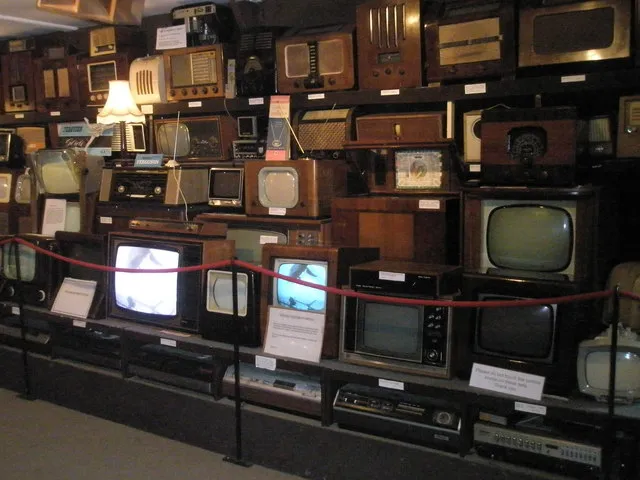
Photo: Basher Eyre, CC BY-SA 2.0, via Wikimedia Commons
There is a particular kind of British television memory that arrives with a theme tune. For some it is the thwack of Gladiators, for others the glowing hexagons of Blockbusters or the cheerful chaos of a Saturday-night quiz where the set looked like it had been built by a particularly ambitious uncle. In 2026, that memory is valuable currency. Scroll through the menus on BBC iPlayer, ITVX, Channel 4 or the big subscription services and you will find a schedule that keeps glancing backwards, hoping the rear-view mirror will show something safer than the road ahead.
This is not a new story. Revivals have been part of British telly since someone first decided that a familiar format was cheaper than a fresh idea. But the current reboot loop feels different. It is not just one or two shows being dusted off for a anniversary special. It is an entire commissioning mood: familiar logos, inherited catchphrases, rebuilt sets and a press release that always uses the word 'beloved'. The pitch is simple. If you remember it, you will probably at least try it. If you do not remember it, the marketing will tell you that you missed something culturally important.
That is not automatically a bad thing. A good revival can be a proper treat. The BBC's Gladiators revival, which launched in 2024, worked because it understood that the original was not just a competition but a family-viewing event. It kept the scale, the silliness and the Saturday-night energy. It did not wink at the camera so hard that the whole thing fell over. It gave older viewers a reunion and younger viewers a spectacle. That is the benchmark, and it is a high one.
The safest bet in the boardroom
Streaming is an expensive business, and commissioners are not paid to be brave every single day. A reboot comes with built-in awareness. The title alone does half the marketing. The format has already been tested by time, or at least by the collective memory of people who used to watch it with their grandparents. In a crowded market, that recognition is a kind of risk insurance.
The problem is that insurance does not make a show good. It just makes it easier to sell. Too many revivals treat nostalgia as the entire meal rather than the seasoning. They bring back the set, the catchphrase and the theme tune, then discover that the actual engine of the format has gone missing. What is left is a tribute act: pleasant enough for a few minutes, but not something you would clear an evening for.
Who exactly is this for?
This is where the reboot loop gets tricky. Older viewers remember the original in a specific way. They remember the host, the pace, the adverts, the fact that it was on at a certain time and everyone at school talked about it the next day. A revival cannot recreate that context, and it should not try. What it can do is respect the reason the format worked in the first place.
Younger viewers, meanwhile, have no emotional attachment to the original. They might know the name, or they might have seen a clip on social media, but they are not tuning in out of loyalty. They are tuning in because the show is funny, tense, warm or interesting right now. If the only joke is 'remember this?', they will drift away faster than you can say 'new series, same sofa'.
That is the generational handover problem in a nutshell. Nostalgia cannot be inherited. It has to be translated. A revival that only speaks to the people who watched the first time is a heritage project. A revival that speaks to everyone is a television show.
Format, not furniture
The best revivals understand the difference between a format and a furniture set. The format is the spine: the rules, the stakes, the reason strangers are willing to make fools of themselves on a Saturday night. The furniture is everything else: the lighting, the music, the host's catchphrase, the exact shade of glitter on the podium.
You can change the furniture. In fact, you probably should. A 1980s quiz dropped unchanged into a 2026 streaming menu can feel like a museum exhibit with a laugh track. The pacing is different, the ad breaks are different, and the audience's tolerance for filler is much lower. But if you change the spine, you are not reviving the show. You are just using the name to launch something else.
That is why the laziest reboots fail. They either embalm the original so completely that it feels like cosplay, or they strip out everything that made it work in a desperate bid to seem modern. The sweet spot is a format that keeps its bones but gets a fresh coat of paint.
The binge test
There is also a streaming-shaped problem here. Most of the shows being revived were built for weekly transmission. They had a rhythm: the Saturday-night build-up, the Sunday-morning debrief, the slow burn of a series that unfolded over months. Streaming likes to drop a whole box set and let the audience inhale it in a weekend. That can work for drama, but it can flatten a revival. If a nostalgic quiz is binged in one go, it stops being event telly and becomes background noise.
Some platforms are learning that weekly releases can still create conversation. A reboot that arrives all at once might get a burst of attention, but it rarely gets the thing that made the original matter: a shared viewing moment. In the UK, we still like a show we can talk about at work on Monday. That is not nostalgia. That is just good scheduling.
What a good revival actually needs
A good revival needs a reason to exist beyond the rights being available. It needs a host who understands the tone without doing an impression of the original. It needs contestants who are allowed to be themselves rather than coached into catchphrase machines. It needs a set that looks like it belongs in 2026, not a tribute museum. And it needs to trust the audience, both old and new, to enjoy the format on its own terms.
The current reboot loop is not going away. Familiar titles are too useful to commissioners, and the appetite for comfort telly is real. But there is a difference between a warm blanket and a dusty one. The best revivals give you the feeling of coming home while still opening a window. The worst ones just leave you sitting in the past, wondering why the room feels smaller.
Nostalgia is a starting point, not a strategy. If UK streamers want the reboot boom to last, they need to stop treating childhood telly as a safe bet and start treating it as a creative challenge. Reheat the format, by all means. But add something new to the plate.