The Sofa Constitution: How Britain Wrote New House Rules for a Shared Streaming Account

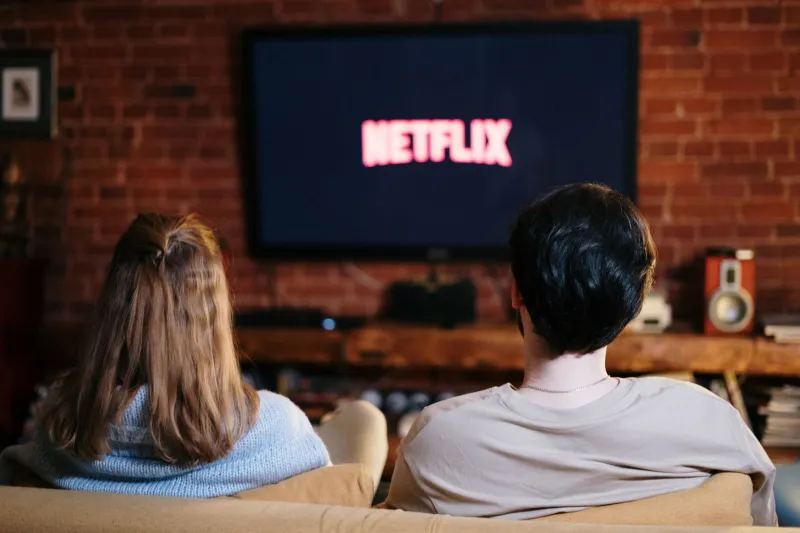
Photo: flatmates on sofa with laptop watching streaming service, living room UK home, via tb-static.uber.com
There was a time, not so long ago, when sharing a streaming account was a simple act of generosity. You knew a person with a login, you asked nicely, and within minutes you were three episodes deep into a Scandinavian drama with a title you couldn't pronounce. It was the digital equivalent of being handed a spare key.
In 2026, that spare key comes with terms and conditions, a verification email and a family member who wants a word about the bill.
Household limits, extra-member add-ons and address checks have turned the humble shared login into a small diplomatic exercise. Nobody set out to draft a constitution for the living room, but here we are, clause by clause, with the telly remote as the seal of office.
The new arithmetic of the family login
The pitch from the platforms is straightforward enough. An account is for a household, and if somebody outside that household wants in, there is usually a paid way to do it. Netflix has its extra-member slots, Disney+ has tightened up who counts as part of the family, and Prime Video has its own ideas about what a household looks like. Even the free, ad-funded services have started nudging people towards proper profiles rather than one chaotic catch-all login.
The result is that sharing is no longer free, exactly. It is a subscription with a social dimension. You are not just paying for telly; you are paying for the privilege of not having a difficult conversation with your sister-in-law.
And the sums are not as friendly as they used to be. Splitting a standard plan and an extra-member fee across two households can work out cheaper than two separate subscriptions, but only just. Once you factor in the ad-supported tiers that now sit at the bottom of every price list, the gap narrows to a pound or two a month. That is a lot of admin for the price of a coffee.
The conversations nobody wants to have
Every shared account has a founding myth. Someone paid first. Someone else set up the profiles. A third person added a debit card in a moment of generosity that they have privately regretted ever since.
Then the household rules land, and the group chat gets awkward. There is the mate who never contributes and never leaves. The ex-partner who technically still has the password and a suspiciously well-curated watchlist. The parent who insists they are 'basically local' despite living two counties away. The lodger who moved out in March and is still, in spirit, on the sofa.
The trickiest is the relative who has decided that 'household' is a state of mind. Ask them to pay for an extra-member slot and you will get a lecture about family values. Ask them to stop using your profile and you will get a screenshot of the last time you borrowed their lawnmower.
Profile etiquette: a field guide
If the account is the house, the profiles are the bedrooms, and the new etiquette is mostly about not leaving your pants on the floor.
- Do not rename a profile you did not create. 'Dave' becoming 'Dave (Nice)' is a declaration of war.
- Do not touch the continue-watching row. That half-finished documentary is somebody's emotional journey.
- Do not pollute the algorithm. One episode of a cartoon while babysitting can send a carefully built diet of Nordic noir and baking shows spiralling into chaos for weeks.
- Do not start a series on someone else's profile and then watch it on yours. It splits the viewing history, confuses the recommendations and, frankly, feels like cheating.
- Do log out of your own profile before handing over the laptop. Cookies are a form of gossip.
There is also the question of the shared login itself. Rotating the password as a form of enforcement is tempting and always backfires. You will forget it, the telly in the kitchen will not have it, and the whole house will blame you.
Workarounds that work, and the ones that do not
The reliable move is a straight split: everyone bungs the account holder a few quid a month, ideally by bank transfer so nobody has to be the one who asks. The extra-member slot, where it is available, is the closest thing to an official solution, and it comes with the considerable advantage of being above board.
Some households have gone the other way and downgraded to an ad-supported tier so that two subscriptions cost roughly what one used to. You lose a little patience during the ad breaks and gain a little peace at the dinner table.
The workarounds that do not work are the ones that require a cover story. Inventing a second address, wrestling with a VPN and explaining to a customer service agent why your home has two postcodes is not a lifestyle upgrade. It is a part-time job with no holiday pay.
So is it still worth it?
For a lot of people, yes, but with conditions. The savings are real, just smaller than they were, and they only materialise if the group is honest about who is paying what. The moment the arrangement relies on one person quietly absorbing the cost while four others watch a box set for free, it is not a household. It is a charity with a streaming tie-in.
The sensible 2026 approach looks less like a family plan and more like a small club. Named members. A clear monthly figure. A designated bill-payer. A shared understanding that profiles are personal and passwords are not trading cards. It sounds precious for something as daft as telly. It is also the only way to keep the group chat from turning into a courtroom.
Sharing an account used to be a shortcut. Now it is a relationship with a billing cycle. Treat it like one, and the sofa stays comfortable.