The Voice Double: Why Britain’s Binge Queue Is Warming to Dubs
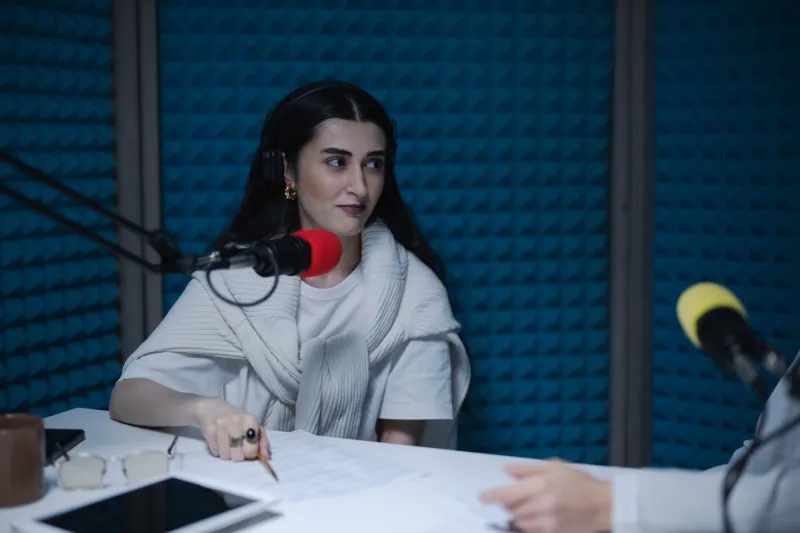
There’s a moment, usually about twenty minutes into a foreign-language thriller, when you realise you’ve stopped reading. The subtitles are still there, hovering at the bottom of the screen, but your eyes have wandered. You’re listening. And the voice coming out of the detective’s mouth is not the one the actor used on set. It’s an English voice, carefully cast, and it’s doing a very good job of making you forget the original.
That moment used to feel like a compromise. For years, British viewers who watched international drama wore subtitles like a badge of honour. Nordic noir, French crime, Spanish heist capers — they were part of a particular kind of telly snobbery, a way of saying you were prepared to work for your entertainment. Dubbing was for bad kung-fu films and holiday TV. Not anymore. In 2026, the dub is quietly becoming the default setting for a growing slice of the UK streaming audience, and the reasons are less about laziness than they are about how we actually watch telly now.
From badge of honour to one-click convenience
The shift didn’t happen overnight. Streaming services have been investing heavily in dubbed audio tracks for years, and the quality has crept up. Where once a dub meant a handful of actors doing distracting accents and a script that sanded off every cultural detail, now you get proper voice casts, decent lip-sync and scripts that at least try to keep the jokes intact. Netflix, Prime Video and others have built out their dubbing operations, and the results are often good enough that you forget you’re not listening to the original.
But the real driver is behavioural. Britain’s viewing habits have changed. We watch on phones, on tablets, on the train, in bed with one eye on the screen and the other on a group chat. We watch while cooking, while folding laundry, while half-heartedly doing something else. Subtitles demand attention. Dubs don’t. If you’re second-screening — and plenty of us are — a dub lets you keep up with the plot without missing the action because you looked away for ten seconds.
There’s also the family factor. A household with mixed ages and mixed reading speeds is far more likely to stick with a dubbed series than one that requires everyone to keep up with fast-moving text. And for viewers with visual impairments or reading difficulties, dubs are not a convenience — they’re access. That’s part of why the trend feels less like a dumbing-down and more like a widening of the door.
Where the dubs still wobble
None of which is to say the dub is perfect. The quality is uneven, sometimes wildly so. Lip-sync remains the obvious problem: English is a different shape in the mouth, and no amount of clever scripting fully hides it. Then there’s the idiom problem. A script that translates a culturally specific joke into a generic English one can leave a scene feeling oddly flat, like a photograph with the colours turned down. And the voice-cast pool can feel small. Regular dub watchers start to recognise the same handful of actors across different shows, which can pull you out of the story faster than any subtitle ever would.
Emotional nuance is another sticking point. A whispered line in the original might land with a specific kind of weariness; the English version can sound merely quiet. The best dubs respect the rhythm of the original performance. The worst ones sound like a read-through. Britain’s viewers are not stupid — they notice. The fact that they’re still choosing dubs anyway tells you something about the trade-offs they’re willing to make.
What it means for homegrown telly
For British drama, the rise of the dub is a double-edged sword. On one hand, it opens up the international market. A UK-produced series that might once have been ghettoised as ‘foreign-language’ for viewers in Spain or Germany can now travel more easily with a good dub. British actors and voice artists are increasingly in demand for dubbing work, and the UK’s post-production sector has quietly become a hub for it.
On the other hand, it raises the competitive bar. If a British viewer can watch a glossy Spanish thriller, a twisty Korean revenge drama and a moody Danish crime series without ever reading a line, then homegrown drama has to work harder to justify its place in the queue. The advantage of ‘it’s in English’ is shrinking. That’s not necessarily bad news — competition can sharpen things — but it does mean British producers can’t rely on language as a moat.
There’s a cultural risk too. If dubs become the only way most people experience international telly, the original performances — the voices, the cadences, the specific textures of another language — become a niche interest. That would be a shame. The best international drama offers a window into how other people sound, not just how they plot. A dub can open that window, but it can also frost it over.
The future of ‘foreign-language’ streaming
The most interesting question is whether the label ‘foreign-language’ will even survive the decade. Streaming platforms are already moving towards personalisation: you pick your audio track the way you pick your subtitles, and the interface stops making a fuss about it. In 2026, the default is no longer obvious. Some viewers will always prefer subtitles. Some will always prefer dubs. Most will mix and match depending on the show, the time of day and how tired they are.
That feels like a healthy place to land. The dub is not the enemy of international telly; it’s just another door into it. The trick is to keep both doors open, and to make sure the dub is good enough that choosing it doesn’t feel like settling. Britain’s binge queue is learning a new language — English, in someone else’s voice. Whether that’s a loss or a liberation depends on what you value more: the performance, or the plot. Most of us, if we’re honest, want both. And the best dubs are finally starting to deliver.